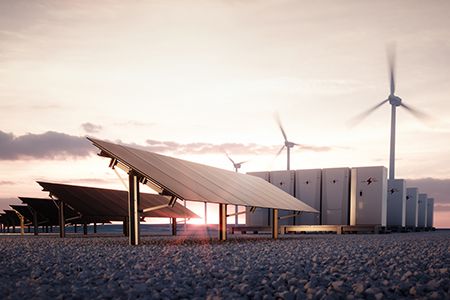
In April 2026, the European Commission restricted ‘high-risk’ inverters from all solar and storage projects receiving loans from EU institutions or direct EU funding. With the 1 November 2026 grandfathering deadline now in the past, Wood Mackenzie estimates that over 21 GW of European solar PV inverter demand will be exposed to these restrictions between 2027 – 2030. Utility scale solar and storage projects receiving EU financing make up a majority of exposed capacity.
The European Commission's decision came as a response to growing cybersecurity and supply-chain concerns brewing across the region. These restrictions are expected to be followed by broader provisions to protect critical grid infrastructure through upcoming policies, including the Cyber Security Act. However, the timing and scope of implementation of these initial funding restrictions have introduced uncertainty and supply chain challenges into the market.
Notably, all inverter manufacturers headquartered in China will be impacted through the country’s ‘high-risk’ designation. Chinese suppliers accounted for over 80% of inverter shipments to Europe in 2025, with even higher market shares in price-sensitive markets that rely most heavily on EU financial support. Given this deep structural dependency, cybersecurity, or trade measures that restrict ‘high-risk’ inverter procurement will drastically reshape Europe’s inverter supply land-scape.
To understand these changes, Wood Mackenzie spoke with or received survey results from more than 30 industry stakeholders, including suppliers, distributors, solar and storage developers, and European national solar associations, in countries with high exposure to EU-supported loans or funding. The study aimed to understand how stakeholders perceive product availability, price increases, and contract renegotiations after the ban, and how that could impact solar and storage deployments in the coming years.
“Western inverter vendors will need to play a significant role in mitigating supply chain shortages and enabling a majority of exposed projects to continue on schedule,” added Joe Shangraw, Inverter Supply Chain Analyst at Wood Mackenzie. “We estimate that non-high-risk inverter manufacturing capacity available to the European market will exceed 150 GW by the end of 2027. This should be adequate to fulfil the region’s solar and storage inverter demand. However, our research revealed several key ways in which western vendors haven’t yet aligned with the needs of stakeholders, especially in Central and Eastern Europe (CEE)”.
“The CEE region faces significantly higher exposure to current EU inverter restrictions, as well as a potential full ban as a result of upcoming Cyber Security Act revisions,” commented Juan Monge, Principal Analyst, Wood Mackenzie. “This is because a higher share of projects here relies on EU loans and funding than elsewhere in the EU, and because Chinese inverter vendors have dominated these highly price-sensitive markets and have established strong sales and after sales infrastructure.”
Stakeholders in CEE reported a disconnect between these manufacturing figures and localised product availability. Some reported that it could take months or even years for western inverter vendors to develop adequate infrastructure to support sales and after-sales services, even for those already certified to sell to their country. Longer lead times for large purchase orders could also delay large scale projects.
Even as western vendors make necessary business expansions, Wood Mackenzie expects price sensitivity to be a leading contributor to demand attrition. Some project developers reported that cost increases as low as 1 – 5% could be detrimental to already razor-thin margins. Even though inverters are a small portion of total costs, system-level price premiums for PV and storage projects can increase by between 2 – 10% as a result of inverter changes.
For more news and technical articles from the global renewable industry, read the latest issue of Energy Global magazine.
Energy Global’s Autumn 2026 issue
The Autumn issue of 2026 is available now! The new issue begins with a regional report on Asia Pacific, looking at the region’s transition from building capacity to building systems. The issue also explores topics such as offshore wind foundations, solar maintenance, training the new workforce, inspection & maintenance, and more! With insights from experts such as Everllence, BW Ideol, EM&I, Watson Farley & Williams, and many more, make sure to check out this issue now.