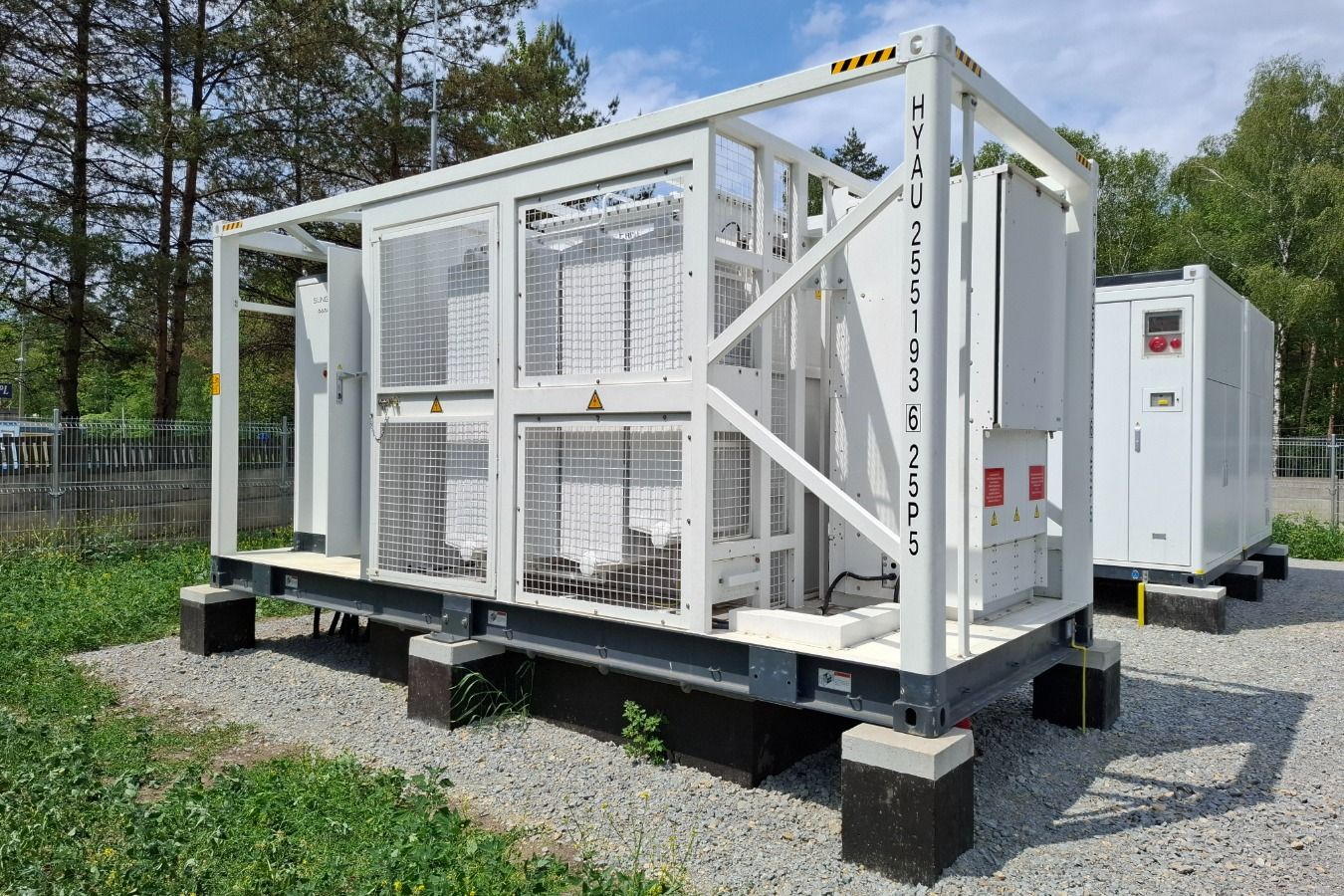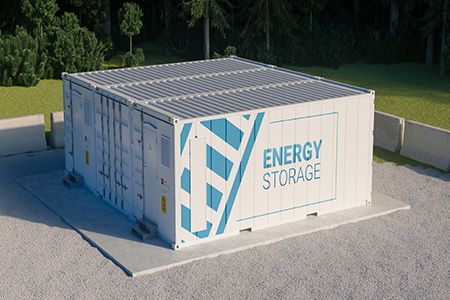
India’s cumulative tendered energy storage capacity has surged from 6.8 GW in 2018 to 90.7 GW in 2025. Standalone energy storage system (ESS) tenders, that contract storage capacity without being tied to a specific renewable generation asset, have emerged as the dominant segment. ESS accounts for more than 71% of total capacity tendered in 2025, with standalone battery energy storage system (BESS) projects making up 60% of this.
“The surge in standalone storage tenders has coincided with declining battery prices and supportive policy measures such as the introduction and expansion of viability gap funding for standalone BESS projects,” said Vasu Mor, Research Associate at JMK Research and Analytics, and Co-Author of this report titled Viability of standalone battery energy storage tariffs discovered in 2025.
The report examines tariff outcomes observed in standalone BESS tenders in India, and examines the factors influencing tariff discovery, while evaluating economic viability under current market conditions, and mapping the near-term outlook for standalone energy storage deployment.
Among the 10.4 GW of standalone BESS capacity allocated in 2025, the two-hour, two-cycle configuration dominated. This type of tender configuration empowers energy offtakers to address both morning and evening peak demand windows within a single day.
“Since mid-2025, though, the four-hour segment has been increasingly gaining prominence, as its higher single-cycle energy throughput is well suited to meet evening peak demand requirements,” says Co-Author Mouli Srivastava, Research Associate at JMK Research and Analytics.
Tariff viability, however, remains a concern for the 2025 standalone BESS bids. Tariffs fell sharply, with the lowest discovered tariff in the year reaching INR 1.48 lakh/MW/month (US$1576/MW/month) for two-hour systems, against an indicative benchmark tariff of INR 2.3 lakh/MW/month (US$2448.95/MW/month) for 2025. Nearly 75% of allocated two-hour capacity now sits in the at-risk category, indicating a significant gap between discovered tariffs and actual project costs. Viable outcomes have largely been confined to early-stage, smaller-scale procurements through five state-led standalone BESS auctions in Karnataka, Tamil Nadu, Tel-angana, and Gujarat.
Addressing this will require revisiting procurement frameworks, including introducing cost-reflective tariff floors, tightening eligibility criteria, and aligning auction framework with execution realities.
The report also evaluates the factors influencing the execution of allocated BESS capacity, focusing on battery cost trends, developer capabilities, and financing conditions. Execution risks in standalone BESS are expected to have broader implications for the sector. Implementation delays of up to 18 months may persist due to challenges related to financial closure, procurement and commissioning. Cost pressures at lower tariffs could also lead to compromised asset quality.
“Although the near-term challenges may lead to some project cancellations or delays, the eventual growth of ESS is inevitable. This momentum is already visible, with the majority of the around 1.8 GWh of grid scale BESS capacity installed as of March 2026 having come online in the last six months of FY26. Meanwhile, the aggressive bidding observed in 2025 is expected to gradually normalise as market participants recalibrate to execution realities,” added Prabhakar Sharma, Senior Consultant at JMK Research and Analytics, and a Co-Author of this report.
Overwhelming reliance on lithium-ion technology has also exposed the Indian energy storage sector to global supply chain shocks, the report shows. Tendering agencies are likely to start focusing on alternative battery technologies with longer lifespans, higher salvage value, and lower exposure to supply-chain risks.
“Going ahead, the BESS technology landscape will be a diversified mix of stor-age technologies including Li-ion, flow batteries, sodium-ion etc. Their co-existence will be driven by different use cases, capacities, and tender designs, each offering distinct advantages in terms of duration, safety, lifecycle, and cost structure” concluded Charith Konda, Energy Specialist, India Mobility and New Energy at IEEFA – South Asia, and a Contributing Author.
For more news and technical articles from the global renewable industry, read the latest issue of Energy Global magazine.
Energy Global's Spring 2026 issue
The first issue of 2026 is here! The Spring issue starts with a report about price cannibalisation, and the effects on the renewable energy industry before moving on to articles on topics including electrical infrastructure, solar optimisation, and site surveys and mapping, with contributors from industry leaders such as CESI SpA, APEM Group, North Star, and more – don’t miss out!