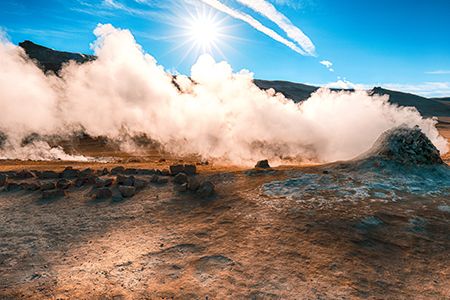
Lithium Harvest Holding A/S has signed a letter of intent (LOI) with a geothermal development partner to form a joint venture to develop an integrated geothermal power and lithium production facility in Alberta, Canada.
At full nameplate capacity, the planned facility targets approximately:
28 500 tpy of lithium carbonate.
0.67 TWh of renewable electricity annually.
The planned project will generate revenue from renewable baseload electricity and lithium carbonate produced from the same geothermal resource, expanding Lithium Harvest’s North American development portfolio.
Development is planned in two phases, with full nameplate capacity reached through phased construction and production ramp-up.
“This agreement advances our ambition to produce some of the world’s cleanest energy and lithium at low cost,” said Sune Mathiesen, Chairman of Lithium Harvest. “The rapid buildout of data centres and the energy transition in general require large amounts of reliable power as well as lithium for EV’s and battery storage. Once completed, this will be one of the largest facilities of its kind in the world.”
“Our focus now is on the resource validation, engineering and financing needed to turn the project’s potential into commercial production.”
The geothermal development partner will contribute its geothermal development capabilities, while Lithium Harvest will contribute its integrated brine-to-battery-grade lithium platform, combining water treatment, proprietary direct lithium extraction (DLE) technology, and refining designed to produce battery-grade lithium carbonate. The integrated design will use geothermal heat for power generation and geothermal brine as the feedstock for lithium extraction and refining.
The project is designed to serve two markets: responsible and reliable electricity and battery materials. Combining the production streams is intended to improve resource utilisation, while phased development will allow capital to be deployed progressively. The project also has the potential to strengthen domestic lithium supply and dramatically diversify the North American lithium supply chain.
Based on current project estimates, operation at full nameplate capacity could avoid up to 933 000 tpy of carbon dioxide emissions. Actual reductions will depend on the final design, operating performance, electricity displacement, and reference scenarios used for comparison.
The partners plan to advance the proposed joint venture through the following workstreams:
Finalise joint venture arrangements and the integrated development plan.
Confirm geothermal resource and lithium process performance through evaluation and technical validation.
Advance engineering, permitting, and commercial arrangements.
Secure the project financing required for construction.
For more news and technical articles from the global renewable industry, read the latest issue of Energy Global magazine.
Energy Global’s Autumn 2026 issue
The Autumn issue of 2026 is available now! The new issue begins with a regional report on Asia Pacific, looking at the region’s transition from building capacity to building systems. The issue also explores topics such as offshore wind foundations, solar maintenance, training the new workforce, inspection & maintenance, and more! With insights from experts such as Everllence, BW Ideol, EM&I, Watson Farley & Williams, and many more, make sure to check out this issue now.