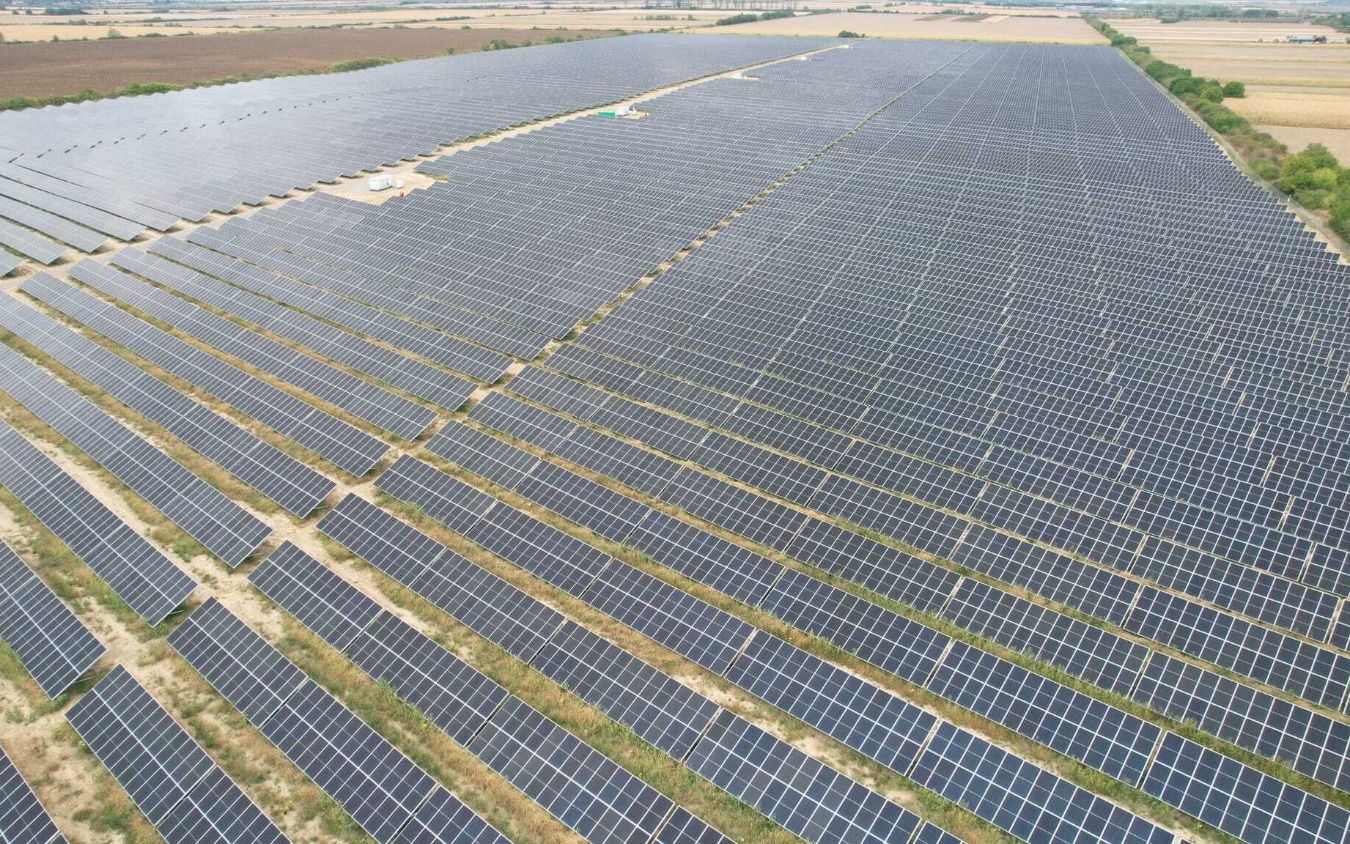
GlobalData’s latest report, ‘Malaysia Power Market Trends and Analysis by Capacity, Generation, Transmission, Distribution, Regulations, Key Players and Forecast to 2035’, reveals that the country’s renewable capacity is expected to increase from around 6.9 GW in 2025 to approximately 31.5 GW. Renewable power generation is estimated to reach 46.4 TWh in 2035 from 10.1 TWh in 2025.
Sudeshna Sarmah, Power Analyst at GlobalData, commented: “Malaysia’s suite of long-term energy plans such as the NEP 2022 – 2040, MyRER, NETR, the National Renewable Energy Policy & Action Plan, and the Thirteenth Malaysia Plan (13MP) lays out an ambitious roadmap to not only hit but to advance its renewable energy targets. These policies are reinforced by enabling measures like market reforms, investments in solar, hydro, and biopower technologies, strategies for grid flexibility and storage, and legislative instruments to improve energy efficiency, all of which are designed to accelerate deployment and mobilise private investment.”
Streamlined approval processes, which cut regulatory red tape, are slashing time to market for new plants and reducing development costs. Initiatives like the Corporate Renewable Energy Supply Scheme (CRESS) introduce competitive bidding and longer contract tenures, significantly boosting investor confidence and unlocking private capital for renewable projects.
Sarmah added: “By deploying both ground-mounted and floating solar farms in tandem with battery storage, Malaysia is significantly boosting generation capacity while driving down wholesale electricity prices. Floating solar projects sidestep land acquisition challenges and often capitalise on waterbody sites that are already equipped with transmission infrastructure, leading to faster construction timelines and reduced grid connection delays. At the same time, battery storage helps smooth out solar power’s daily inconsistencies by capturing excess midday power and supplying energy during evening peak hours. This reduces reliance on high-cost, flexible fossil fuel generators, enhancing overall grid utilisation and stability.”
Malaysia’s surging demand from data centres, electric vehicles, cooling systems, and industrial processes is pushing up electricity usage both day and night. This opens the door for fresh generation capacity and drives investment in grid expansion and modernisation. Stable, predictable demand underpins financing for large scale projects, helping utilities leverage scale and recoup infrastructure costs. At the same time, increased demand fosters a more diversified energy mix, boosts reliability, and minimises risks of brown-outs while improving power quality.
Sarmah concluded: “From 2020 through 2025, Malaysia’s energy investment portfolio has increasingly tilted towards renewables. Solar photovoltaics (PV) has seen robust and steady growth, with capital allocations rising approximately US$2.1 billion by 2025. Investments in hydro and biopower remain modest while gradually increasing, they are still small relative to solar. Looking ahead to 2026 – 30, solar PV is projected to dominate the renewable energy investment landscape. Gas will maintain a supporting role, with investment in balancing and peaking capacity hovering between US$0.2 – 0.6 billion annually. Hydro is expected to stabilise in the US$0.1 – 0.5 billion range, while biopower, though still marginal, creeps upward towards approximately US$0.2 billion per year.”
For more news and technical articles from the global renewable industry, read the latest issue of Energy Global magazine.
Energy Global's Spring 2026 issue
The first issue of 2026 is here! The Spring issue starts with a report about price cannibalisation, and the effects on the renewable energy industry before moving on to articles on topics including electrical infrastructure, solar optimisation, and site surveys and mapping, with contributors from industry leaders such as CESI SpA, APEM Group, North Star, and more – don’t miss out!