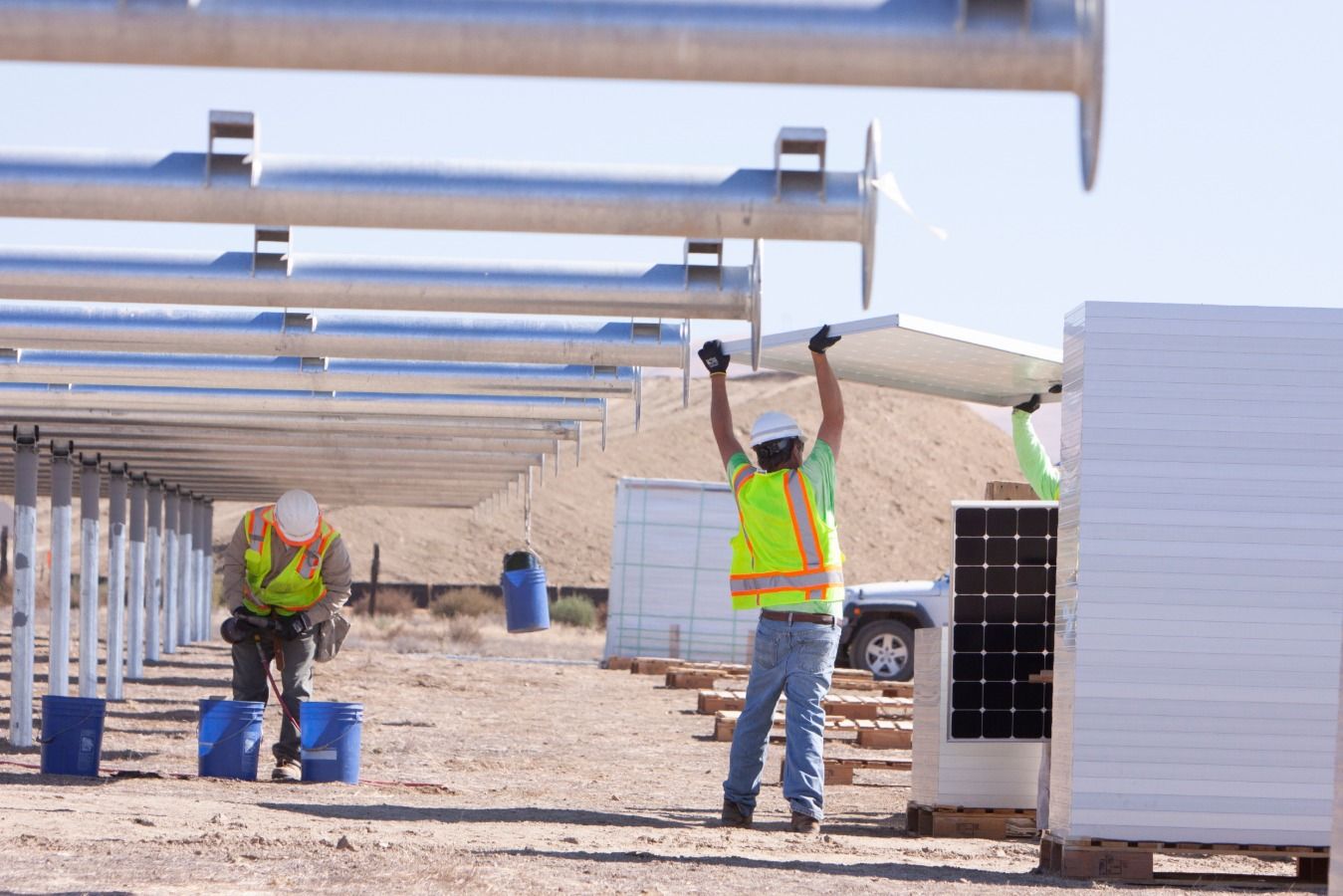
Renewable curtailment in Spain has remained elevated since the April 2025 grid blackout, costing the sector €140 million in lost revenue and set to worsen further as approximately 10 GW of utility scale solar connects across the remainder of 2026 and through 2028 into an already congested network, according to new Wood Mackenzie analysis. The incoming capacity is part of a 16 GW wave across the full 2026 – 2028 period, of which a significant portion connected in the first eight months of 2026 alone.
The finding comes from ‘Spain's Technical Curtailment Crunch: How the Next Wave of Solar Growth Will Impact Trends’, a report drawing on nodal-level network modelling across Spain's full transmission system. Redispatch volumes in the technical constraints market have not returned to pre-blackout levels. Uncompensated constrained-off volumes now stand at 4% of available renewable supply year-to-date, dominated by gas being called on to replace solar and wind generation being switched off to manage grid stability.
That national average conceals a sharper picture at the local level. At certain nodes in Extremadura and Murcia, curtailment already exceeds 25% of renewable output. For asset owners at those locations, one-quarter of potential generation revenue is not being earned.
“Redispatch volumes in Spain's constraints market have not normalised since the April 2025 blackout, and the numbers explain why,” said Agustin Huerga, Research Analyst, European Power and Renewables at Wood Mackenzie. “Nodes in Extremadura and Murcia are losing more than a quarter of potential output. The next 10 GW of solar connecting into already congested corridors will deepen that before it eases. More than 35 GW of the existing fleet can provide dynamic voltage control at no additional cost. Whether curtailment stabilises in 2027 or continues rising depends almost entirely on how fast that capacity is brought to compliance.”
If none of the 35 GW of renewables capable of providing dynamic voltage control at no additional cost are brought to compliance, curtailment is forecast to rise 18% over the next two years. That condition, not grid congestion alone, is what determines whether the downside scenario materialises. In that case, total curtailment reaches 6.5 TWh by 2028, against 1.3 TWh in 2023.
The structural cause is a grid that was not designed for the pace or scale of Spain's solar buildout. Congestion that was once wind supply-driven is now solar supply-driven. Roughly half of technical curtailment in 2026 stems not from physical line capacity limits but from synchronous system issues: inertia, short-circuit current, and frequency and voltage control. These are services that gas and nuclear plants provide as a matter of course. Inverter-based solar and wind assets must be specifically configured to replicate them, and a large portion of Spain's existing fleet is not.
Around 7 GW of solar PV and 26 GW of wind capacity require inverter retrofits to provide dynamic voltage control, having been commissioned before Royal Decree 647/2020 came into force. Up to 50% of the existing fleet cannot provide the service without further investment. More than 35 GW can be enabled to do so at no additional cost, and plants that do receive priority of dispatch. Grid operator REE had habilitated 4.2 GW of renewable plants through its habilitación programme by May 2026. The regulatory framework exists. The question is whether the pace of compliance keeps up with the pace of new capacity connecting to the grid.
If it does not, Spain's renewable curtailment targets face a material delivery risk. Wood Mackenzie's base case projects curtailment stabilises in 2027 and 2028, but only if the provision of dynamic voltage control from new and existing renewables keeps pace with the approximately 10 GW of solar capacity still to connect.
Solar-driven grid stress is concentrating geographically around Madrid, Toledo, and Cáceres as 3 GW of new solar PV comes online in those corridors. Developers are already responding, siting new projects in lower-resource zones including León, Valladolid, Huesca, and Zaragoza, a sign that the investment geography of Spanish solar is shifting in real time.
Grid reinforcement is the structural solution, but a seven-year average lead time from greenfield to completion rules it out as a near-term fix. Battery storage and rising electricity demand carry more weight in the short term. Wood Mackenzie forecasts 10 GW of battery storage operational by 2030, rising to 20 GW in the high case, against a 2025 baseline of 0.2 GW. Over 40 GW of battery storage is under development, with 25 GW holding grid access approval. Demand growth from data centres adds 2.3 GW to the pipeline, with over 2 GW forecast online by 2030. Renewables are expected to resolve half of the enhanced contingency management problem, with synchronous condensers closing the remainder by 2029. Curtailment is projected to fall 30% per year over the outlook if those conditions hold.
For more news and technical articles from the global renewable industry, read the latest issue of Energy Global magazine.
Energy Global’s Autumn 2026 issue
The Autumn issue of 2026 is available now! The new issue begins with a regional report on Asia Pacific, looking at the region’s transition from building capacity to building systems. The issue also explores topics such as offshore wind foundations, solar maintenance, training the new workforce, inspection & maintenance, and more! With insights from experts such as Everllence, BW Ideol, EM&I, Watson Farley & Williams, and many more, make sure to check out this issue now.